
Last updated September 25, 2026
Seasonal ADU Care for West Hollywood: Year-Round Homeowner’s Guide
The Santa Ana winds that arrive each fall carry enough particulate to block a mini-split filter in two weeks. Most ADU owners clean them annually. That’s why HVAC warranties get voided in WeHo before the unit is three years old.
West Hollywood’s climate tricks homeowners into complacency. The mild temperatures feel forgiving, but the marine layer’s moisture, the Santa Anas’ grit, and the sudden heavy rains on drought-hardened soil create a specific wear pattern that generic maintenance schedules miss. This guide maps a quarterly care routine to the actual weather events that hit West Hollywood properties, with special attention to the differences between newly built detached ADUs, garage conversions, and interior Junior ADUs. Whether your unit is a new detached ADU in West Hollywood or a converted garage, the maintenance signatures differ, and so should your inspection protocol.
Quick Answer
Seasonal ADU maintenance in West Hollywood requires four distinct quarterly routines: Santa Ana particulate prep in fall, post-rain waterproofing inspection in winter, marine-layer moisture management in spring, and heat-load verification in summer. For a complete ADU Design & Permitting Maintenance Checklist for West Hollywood Homeowners, see our dedicated guide. Neglecting any quarter risks voiding equipment warranties, triggering mold in garage conversions, or cracking drought-stressed exterior caulking before the first winter rain.
Table of Contents
- Q4 (October-December): Santa Ana Prep and Pre-Rain Sealing
- Q1 (January-March): Post-Rain Inspection Protocol
- Q2 (April-June): Marine Layer Season and Condensation Management
- Q3 (July-September): Heat Management and Ventilation Audit
- What Maintenance Records You Need for Permit-Backed Warranty Claims
- How Maintenance Differs by ADU Type: Detached, Garage Conversion, or JADU
- Common Mistakes to Avoid
- When to Call a Professional
- Frequently Asked Questions
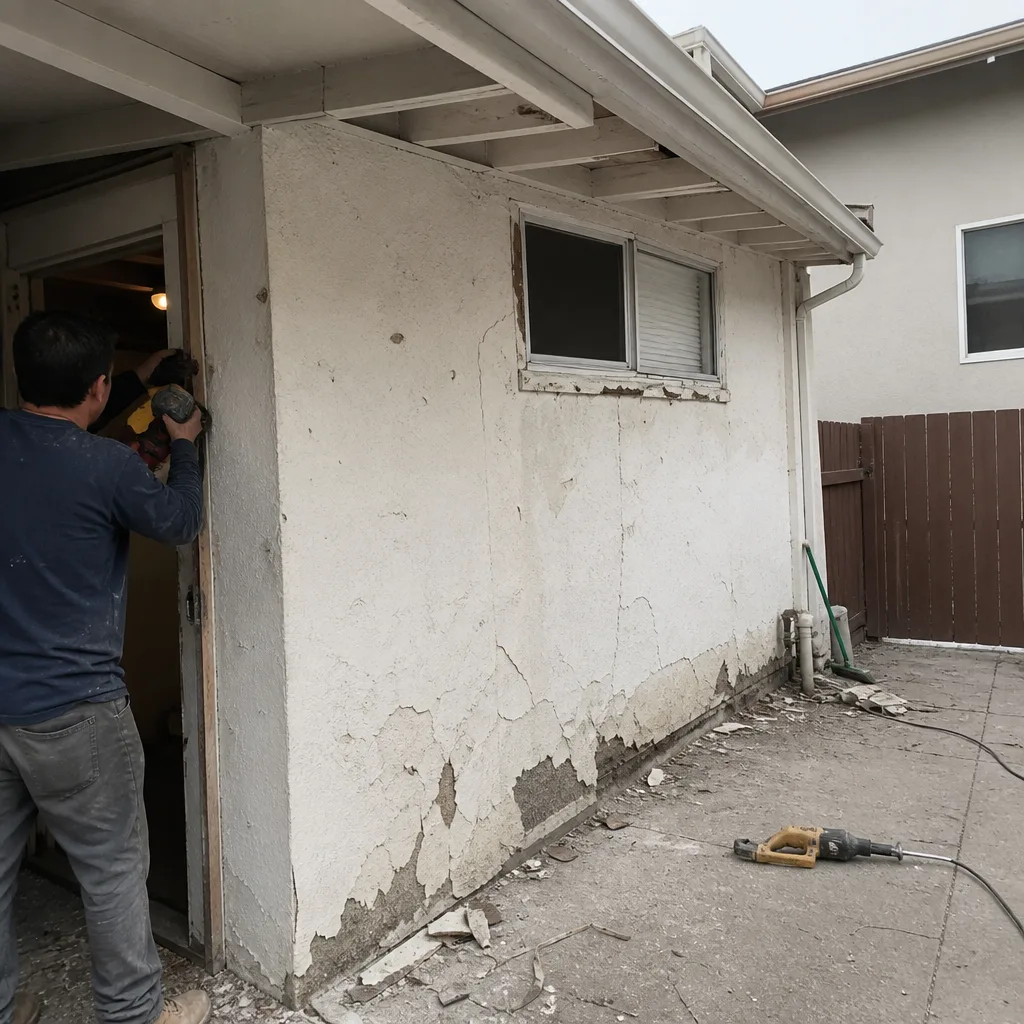 Before
 After
AfterQ4 (October-December): Santa Ana Prep and Pre-Rain Sealing
The Santa Ana wind events that sweep through West Hollywood from October into December are not just a nuisance for allergy sufferers. They are a mechanical stressor on every exterior system of your ADU. We’ve documented this repeatedly on projects across the city: filters clog, caulking dries and separates, and fine particulate works into window tracks and door seals.
Here’s what the quarterly schedule looks like for this period.
Mini-Split Filter Service During High-Particulate Events
Most manufacturers specify filter cleaning every 30 to 90 days. In West Hollywood during Santa Ana season, that interval collapses. We’ve pulled filters from garage conversion ADUs near Melrose that were completely occluded after 14 days of sustained offshore flow. The units then run longer cycles, draw more amperage, and trip high-pressure faults.
The warranty implication is direct. Mitsubishi, Daikin, and Fujitsu all require documented filter maintenance for compressor coverage. If you file a warranty claim and cannot produce service records, the claim is denied. We include filter service in our ADU Design & Permitting in West Hollywood handover packet, but most owners let it slide.
Our recommendation: inspect filters weekly during Santa Ana events, clean or replace biweekly at minimum from October through December, and photograph the filter condition each time. That photo is your warranty documentation.
Exterior Caulk Inspection Before First Rain
West Hollywood spent most of the last decade in drought conditions. Soil moisture dropped, substrates shrank, and existing caulking joints opened wider than their original bead width. The first significant rain then hits a crack network that did not exist when the caulk was applied.
Inspect every horizontal and vertical joint on your ADU exterior in mid-October, before the first Pacific storm. Pay particular attention to:
- Window-to-stucco perimeters, where thermal cycling is highest
- Door thresholds, especially on north-facing entries that stay damp
- Penetrations for mini-split line sets, where the grommet may have hardened
- Roof-to-wall transitions on detached ADUs, where expansion is unconstrained
If the caulk bead has separated from either substrate, cut it out and reapply. Do not caulk over failed material. The new bead will not bond to the old, and you’ll trap water behind a cosmetic repair.
Drainage Path Clearing Before Wet Season
West Hollywood’s first rains of the season often come hard and fast after months of dry accumulation. Gutters that held leaves from September Santa Anas will overflow. Downspouts that terminated on hardscape will sheet-flow toward the ADU foundation.
Clear all drainage paths by October 15. Verify that downspouts discharge at least 6 feet from the foundation, per standard geotechnical practice for the clay-heavy soils common in the Beverly Grove and Melrose neighborhoods. If your ADU sits on a zero-lot-line configuration, as many West Hollywood conversions do, consider a dry well or French drain to handle concentrated flow.
For garage conversion ADUs in West Hollywood, this is especially critical. The existing slab was often poured without perimeter drainage, and the conversion may have altered the original grade. Water pooling against a garage slab can wick through the stem wall and trigger efflorescence inside the finished space.
Q1 (January-March): Post-Rain Inspection Protocol
After the first sustained winter rains, every ADU in West Hollywood needs a targeted inspection. The protocol differs based on whether your unit is newly constructed or a conversion, and whether the waterproofing assembly is a fluid-applied membrane, a peel-and-stick system, or a traditional building paper and lath stucco.
New Detached ADU Inspection Points
New construction in West Hollywood typically uses a fluid-applied waterproofing or self-adhered membrane under stucco or siding. The failure signatures to look for are:
- Staining at window heads. If the membrane laps were not sequenced correctly, water enters at the head flashing and migrates down the rough opening. Look for a yellow-brown stain on the interior drywall, usually within 2 inches of the window frame.
- Soft spots in exterior decking. If your detached ADU includes a covered deck or balcony, probe the walking surface with a screwdriver after rain. Sponginess indicates the waterproof deck coating has failed at a seam or penetration.
- Grade line stucco cracking. New foundations settle slightly in their first wet season. Hairline cracks at the grade line are common. Cracks wider than 1/16 inch, or any crack that shows soil behind it, need repair before the next rain cycle.
Garage Conversion Inspection Points
Garage conversions inherit the original structure’s waterproofing, which was never designed for habitation. The failure signatures are different and usually more severe:
- Floor-level dampness. The original garage slab rarely has a vapor barrier. In West Hollywood’s clay soils, winter rains drive moisture upward through the slab. If your finished floor feels cool and damp, or if vinyl plank edges are curling, you have a vapor drive problem.
- Corrosion at the overhead door header. Many conversions retain the original header and frame it in. If the header was not properly flashed when the door was removed, rain enters the pocket and rusts the steel. Look for orange staining on the interior finish near the former door location.
- Efflorescence on interior walls. White crystalline deposits indicate water is moving through the masonry or concrete and evaporating at the interior surface. This is not cosmetic. It signals that the waterproofing retrofit, whether exterior membrane or interior sealant, has failed.
We’ve inspected garage conversions in the Norma Triangle where the owner spent $8,000 on interior finishes before discovering the vapor barrier omission. The correct fix, a topical moisture mitigation system, then required removing those finishes. Document your post-rain inspection with dated photos. If you find active moisture, those photos support a warranty claim or a correction request to your builder.
Q2 (April-June): Marine Layer Season and Condensation Management
From April through June, West Hollywood sits under the marine layer for extended morning periods. The temperature differential between the cool, saturated outside air and the conditioned interior creates condensation risk that peaks in this quarter. Garage conversions are especially vulnerable because they often lack the continuous insulation and mechanical ventilation of new construction.
Condensation in Poorly Ventilated Garage Conversions
We’ve measured interior relative humidity in West Hollywood garage conversions that hit 72% during marine layer events. At that level, mold growth is inevitable on any organic surface. The root cause is usually one of three conditions:
- Missing or undersized exhaust ventilation. California Title 24 requires mechanical ventilation in all habitable spaces, but retrofit installations sometimes use the minimum CFM without accounting for the moisture load of a former garage.
- Thermal bridging at the slab edge. The exposed concrete slab perimeter, where it meets the exterior grade, stays cold. Warm interior air contacts this surface and condenses.
- Single-pane windows or original garage doors repurposed as walls. These assemblies have very low surface temperatures during marine layer mornings. Condensation runs down the glass and pools on the sill.
The fix depends on the cause. For ventilation, we specify a continuous exhaust fan with humidity-triggered operation, not just a timer. For slab-edge bridging, a thermal break strip at the perimeter, installed before finish flooring, reduces the temperature differential. For windows, replacement with dual-pane units is the only durable solution; dehumidifiers are a costly bandage.
Stucco Efflorescence: What It Signals
White or gray powder on stucco surfaces during marine layer season is efflorescence, soluble salts carried to the surface by moisture and left behind when the water evaporates. In West Hollywood, this appears most often on north and west elevations that stay damp longest.
Light, brushing efflorescence is normal in the first year after stucco application. Heavy, recurring efflorescence indicates a systemic moisture path. The substrate behind the stucco is wet, and the moisture is finding its way out. Possible causes include:
- Improper lath placement or fastener penetration that breaches the weather-resistive barrier
- Missing or reversed flashing at roof-wall intersections
- Plumbing leak inside the wall cavity, often at a mini-split condensate line
Do not simply power-wash efflorescence and move on. The salt deposit is a symptom. Identify the moisture source, or the substrate will degrade. We’ve removed stucco in West Hollywood ADUs where the OSB sheathing behind was punky and black, all because the owner treated efflorescence as a cosmetic issue for three years.
James Hardie Siding Considerations
For ADUs clad in James Hardie fiber-cement siding, the marine layer presents a different risk. The product is impervious to moisture itself, but the painted surface can fail prematurely if applied over damp substrate or if the joint flashing is omitted. Inspect caulked joints at trim boards each spring. If the paint is bubbling or the caulk is separating, moisture is entering at the joint. James Hardie specifies a 1/8-inch gap at all butt joints with factory-approved flashing behind. We’ve seen West Hollywood installations where the gap was caulked flush, trapping water.
Q3 (July-September): Heat Management and Ventilation Audit
West Hollywood summer temperatures are moderate compared to the San Fernando Valley, but the combination of solar gain, urban heat island effect, and increasingly common multi-day heat events can push ADU interiors beyond the Title 24 modeled conditions. This quarter is when undersized HVAC reveals itself.
How a West-Facing ADU Performs Against Its Title 24 Model
California’s Title 24 energy code calculates cooling loads using historical weather data and standard assumptions about shading, infiltration, and internal gains. The model assumes a certain amount of exterior shading from adjacent structures. In West Hollywood’s dense neighborhoods, that assumption often fails for west-facing ADUs.
A detached ADU with full west exposure, especially one with large windows for natural light, can experience peak cooling loads 30-40% above the Title 24 calculation. The mini-split specified for the modeled load then runs continuously during September heat events, never reaching setpoint. The compressor works at maximum capacity, amperage draw stays high, and equipment life shortens.
Signs your HVAC is undersized for actual conditions:
- Unit runs continuously for more than 2 hours without cycling off
- Indoor temperature at 4 PM is more than 4 degrees above setpoint
- Compressor noise changes from steady hum to high-pitched whine, indicating overload
- Breaker trips on the hottest days, typically late afternoon when solar gain and ambient temperature peak together
The solution is not a larger unit alone. First, reduce the load: exterior shade screens, reflective film on west windows, or a light-colored cool roof coating. Then recalculate the revised load and size the replacement equipment accordingly. We perform this analysis for West Hollywood clients who contact us about comfort complaints in existing ADUs.
Ventilation Audit Checklist
Summer is the right season to verify that your ventilation strategy works under maximum thermal stress. Run through this checklist in late July:
- Confirm exhaust fan operation. Hold a tissue to the grille. It should draw firmly. If not, check for duct blockage or fan failure.
- Verify intake air path. Every cubic foot exhausted must be replaced. If the ADU is tight, the exhaust fan starves and performance drops. Ensure a window or dedicated intake vent can open.
- Check attic or roof space ventilation on detached units. West Hollywood permits require minimum ventilation area, but installation quality varies. Look for blocked soffit vents or missing ridge vent sections.
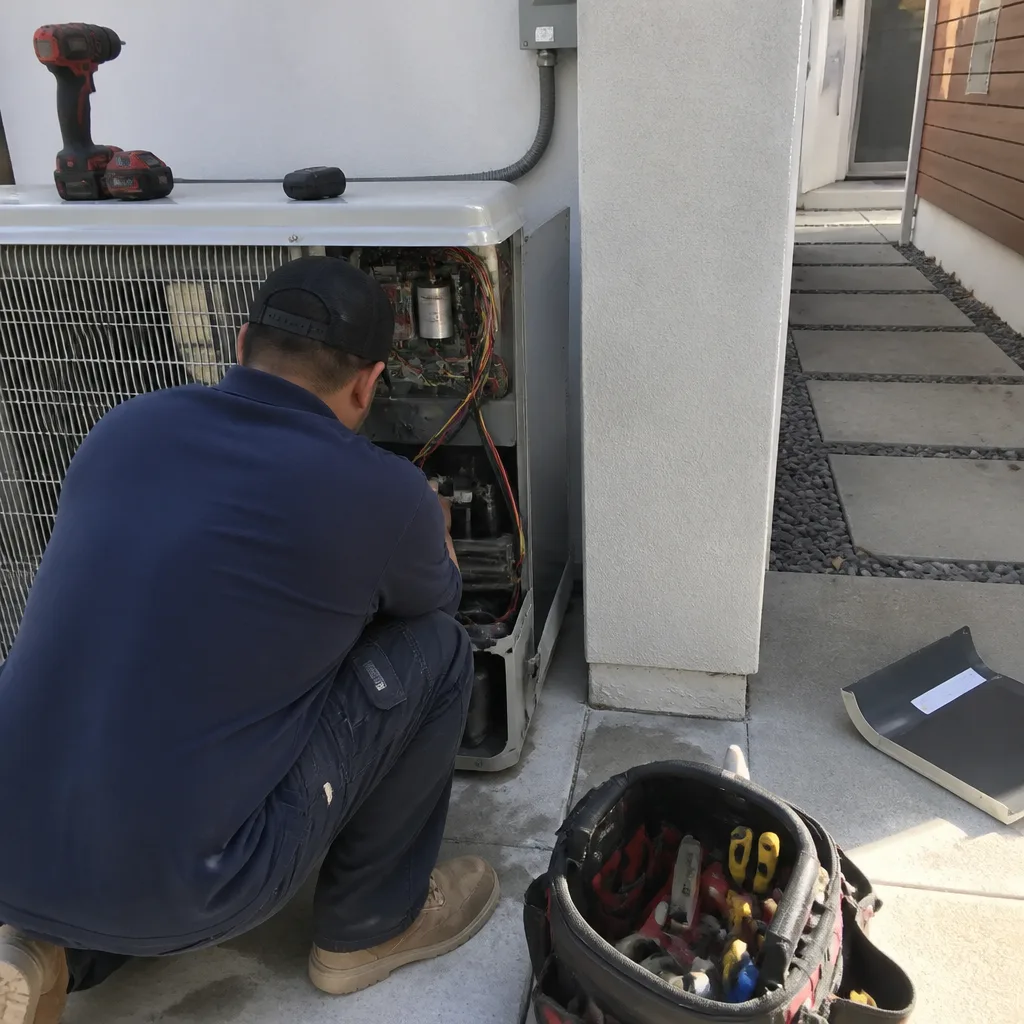
- Inspect mini-split condenser coil. Dust accumulation from Santa Ana season reduces heat rejection. Clean with foaming cleaner, working from top to bottom.
- Measure temperature split. The air entering the indoor coil should be 15-20 degrees warmer than the air leaving. A smaller split indicates refrigerant charge issues or coil fouling.
Document your findings with dated photos. This record supports warranty claims and gives any service technician a baseline.
What Maintenance Records You Need for Permit-Backed Warranty Claims
Every ADU built under permit in West Hollywood has warranties attached to specific systems: the HVAC equipment, the waterproofing membrane, the windows, possibly the roofing. Understanding ADU Permits, Codes & Inspections in CA: What You Need to Know helps ensure these protections remain valid. These warranties are not automatic. They require proof of proper maintenance, and the definition of “proper” is in the manufacturer’s terms, not your interpretation.
We’ve handled warranty claims for clients where the difference between approval and denial was a folder of dated photos. Here’s what to keep:
- HVAC: Filter cleaning/replacement photos with visible date stamp, annual professional service invoices, any diagnostic readings (temperature split, refrigerant pressures)
- Waterproofing: Annual inspection photos showing condition of caulking, flashing, and stucco, plus any repair records
- Windows and doors: Lubrication of hardware, track cleaning, seal inspection photos
- Roofing: Debris removal records, gutter cleaning dates, any puncture or damage documentation
- General: All original permit documents, final inspection sign-offs, and the builder’s written warranty with its specific terms
The Haven Standard, which governs every project we complete, includes a documented photo record on every visit. Clients receive this record automatically. If your ADU was built by another firm, create your own system. A cloud folder with dated subfolders, named by system, is sufficient. The key is consistency and retrievability.
When you file a warranty claim, submit the maintenance record with the claim. Do not wait for the manufacturer to ask. Proactive documentation signals that you are an informed owner, not someone seeking coverage for neglect.
How Maintenance Differs by ADU Type: Detached, Garage Conversion, or JADU
The maintenance priorities for your West Hollywood ADU depend on its origin story. A new detached unit, a garage conversion, and a Junior ADU within the primary residence each have distinct risk profiles.
New Detached ADU
New construction has the fewest hidden conditions but the most exterior exposure. Focus on the building envelope: stucco or siding, roofing, window flashing, and the foundation drainage. The systems are modern and should perform to spec, but any installation error will manifest in the first two years. We recommend quarterly exterior walkarounds for the first 24 months, then semi-annual.
Prefab and modular systems, whether from Abodu, Cover, or other manufacturers we specify, arrive with factory warranties that often require specific maintenance protocols. For example, some modular units use proprietary flashing systems that must be inspected with a particular sequence. We coordinate these requirements into the single contract, so our clients receive a unified maintenance schedule, not a stack of conflicting manufacturer booklets.
Garage Conversion ADU
Conversions inherit the sins of the original structure. The slab, the walls, and the roof were built for vehicle storage, not human habitation. Moisture management is the dominant concern, as detailed in the Q1 and Q2 sections. Additionally, verify that the electrical service upgrade, required by code for the conversion, has not been overloaded by tenant-added loads. We’ve found garage conversions in West Hollywood where the 100-amp subpanel was at 85% capacity with normal use, leaving no margin for a space heater or EV charger.
Junior ADU and Interior Conversion
A JADU within the primary residence shares walls, roof, and mechanical systems. The maintenance burden shifts to coordination with the main house. If the HVAC is zoned, verify the zone damper operation seasonally. If the JADU has a separate mini-split, it needs the same filter service as a detached unit. The plumbing, often branched from the main house, is vulnerable to pressure fluctuations during whole-house use. Listen for water hammer, and install arresters if present.
The permit status matters for JADUs. Many West Hollywood JADUs were permitted under the more flexible state standards that took effect in 2020. The inspection record may not include the same detail as a full ADU permit. Request a copy of the final inspection from the city and verify which systems were actually inspected versus grandfathered.
Common Mistakes to Avoid
- Cleaning mini-split filters on the same schedule as the main house. West Hollywood ADUs, especially detached units, see more exterior air infiltration and higher particulate loading. The main house schedule is too infrequent.
- Caulking over old caulk without removal. The new bead bonds to the failed material, not the substrate. Water enters behind both layers. Cut out, clean, and start fresh.
- Ignoring efflorescence as “normal for stucco.” It is not normal after the first year. It is a moisture path indicator that will destroy sheathing if unaddressed.
- Assuming a garage conversion slab is dry because it looks dry. Capillary moisture rise is invisible until it damages flooring. Test with a calcium chloride kit or call for professional moisture mapping.
- Skipping the post-first-rain inspection on a new ADU. The first wet season is when installation errors reveal themselves. Catching them early preserves warranty coverage and prevents escalation.
- Running an undersized HVAC unit continuously rather than addressing the load. Compressor replacement costs $3,000-$5,000. Shade screens and window film cost a fraction of that and reduce the actual need.
- Failing to document maintenance with dated photos. Manufacturer warranty departments deny claims for lack of proof. Your verbal assurance of regular care carries no weight.
When to Call a Professional
Some conditions exceed homeowner maintenance and require licensed evaluation. Call a professional if you find active water intrusion, suspect mold growth, smell electrical overheating, or your HVAC cannot maintain setpoint after basic filter and coil cleaning. Structural cracks wider than 1/8 inch, sloping floors, or doors that suddenly bind also need assessment.
Ellery ADU Studio West Hollywood offers free estimates in West Hollywood. Call (213) 329-7167 to schedule an inspection, or bring us any written estimate you’ve already received for a Free Second Opinion. We will tell you what we find, what it means for your specific ADU type, and what documentation you’ll need if a warranty claim is appropriate.
Frequently Asked Questions
Homeowners typically spend $400-$900 annually on DIY supplies and professional HVAC service for a standard detached or garage conversion ADU in West Hollywood. Filter replacements, caulk, and cleaning supplies run $100-$200. A professional mini-split service, including coil cleaning and refrigerant check, is $250-$450 per visit. Deferred maintenance that requires remediation, such as mold abatement or stucco repair, starts at $2,000 and escalates quickly. Call (213) 329-7167 for an exact quote on your specific ADU - estimates are free.
Under the Haven Standard, Clause 1, every project is quoted with a written price before any work begins. The scope is locked at signing. No door-side upsells, no scope creep. If we find a condition that requires additional work, we document it, explain it, and provide a separate written amendment for your approval before proceeding.
During Santa Ana season, inspect filters weekly and clean or replace biweekly. The rest of the year, monthly filter inspection and quarterly cleaning is sufficient. Schedule professional service, including coil cleaning and refrigerant verification, annually in early fall before the heating season. This frequency exceeds manufacturer minimums and preserves warranty coverage.
Routine maintenance, filter changes, caulking, and cleaning do not require permits. Repairs that involve structural modification, electrical or plumbing system changes, or envelope replacement (re-stucco, re-roofing) may need permits depending on scope. West Hollywood Building and Safety can confirm requirements for your specific project. We pull all required permits as part of our design-build contracts.
Fluid-applied membranes and self-adhered systems, properly installed, should perform 20-30 years. Caulking at joints and penetrations needs replacement every 5-10 years depending on sun exposure and substrate movement. The first wet season is the critical test. If no leaks appear in year one, the installation was likely correct. Annual inspection thereafter catches degradation before it becomes intrusion.
Garage conversions require more aggressive moisture monitoring because they repurpose a structure never designed for habitation. The slab, walls, and roof need regular inspection for water paths that would not affect a purpose-built dwelling. New detached ADUs have fewer hidden conditions but more exterior envelope to maintain. The HVAC in a detached unit works harder due to greater thermal exposure. JADUs within the primary house share systems and require coordination with whole-house maintenance.
The Bottom Line
West Hollywood’s mild climate is a maintenance trap. The absence of freezing winters and scorching summers lulls ADU owners into annual or neglectful care schedules, while the actual conditions, marine layer moisture, Santa Ana particulate, and drought-substrate rain damage, wear systems faster than generic guidance suggests. A quarterly routine matched to local weather patterns prevents the warranty voids, mold events, and envelope failures that cost multiples of preventive care. Document everything. The photo you take today is the warranty claim you win in three years.
Ellery ADU Studio has designed, permitted, and built over 900 ADUs since 2015, every one with a written price before work started and a documented photo record when complete. If you’re unsure about your ADU’s condition or want a professional assessment of what this season’s maintenance should include, call (213) 329-7167. A live person answers 24/7.
Written by Nadia Ellery, Owner at Ellery ADU Studio West Hollywood, serving West Hollywood since 2015.