
Cover Junior ADU Conversion: The West Hollywood Owner’s Guide
Cover junior ADU conversion in West Hollywood typically runs $85,000-$140,000 all-in, from permit-ready drawings through final inspection, with most projects quoted within 48 hours of site visit. We specify and coordinate Cover’s prefab panel system as part of our single-contract design-build model, and we stock the critical connection hardware and weather-sealing components that fail most often in this climate. If your Cover unit is showing air infiltration, panel misalignment, or moisture staining at the floor-wall junction, the problem is usually the perimeter gasket set or the adjustable leveling feet, both of which we carry for same-day replacement on confirmed models.
Most West Hollywood owners discover the issue during Santa Ana season, when pressure differentials expose gaps that stayed quiet all summer. Others notice it after a heavy winter rain, when water finds the path of least resistance through a compressed gasket at the slab edge. The symptom arrives as comfort; the cause is usually installation-phase hardware that has settled, thermally cycled, or been disturbed by the minor seismic shifts common to the basin between the Hollywood Hills and Beverly Hills.
Which Cover Models This Applies To
Cover has shipped three distinct product generations to California, and the part families do not cross-compatibilize. The first step is locating the data plate, usually inside the electrical chase near the main service panel or stamped on the hinge side of the entry door frame. You are looking for a build date and a model prefix: “CV1-” indicates first-generation units (2019-2021), “CV2-” covers the revised envelope system (2022-2024), and “CV3-” denotes the current steel-frame chassis with integrated MEP rough-in.
The junior ADU conversion specifically refers to the interior reconfiguration of any Cover unit from open studio to one-bedroom layout, which requires replacement of the partition track system, door hardware, and on CV1/CV2 units, the relocated HVAC mini-split line-set penetration seal. We specify OEM Cover gaskets and leveling hardware for warranty continuity, but source the partition track and finish hardware from McKinney and Hafele where Cover’s lead times exceed project schedules. The gotcha: CV1 units used a proprietary 2.25-inch partition track that Cover no longer stocks; we machine-adapt standard 2.5-inch track with a custom shim pack that we document in the permit revision. This is not a detail you will find in Cover’s literature, and it is the reason we verify track dimension on every CV1 call before ordering.
Signs Your Cover Junior ADU Conversion Is Failing
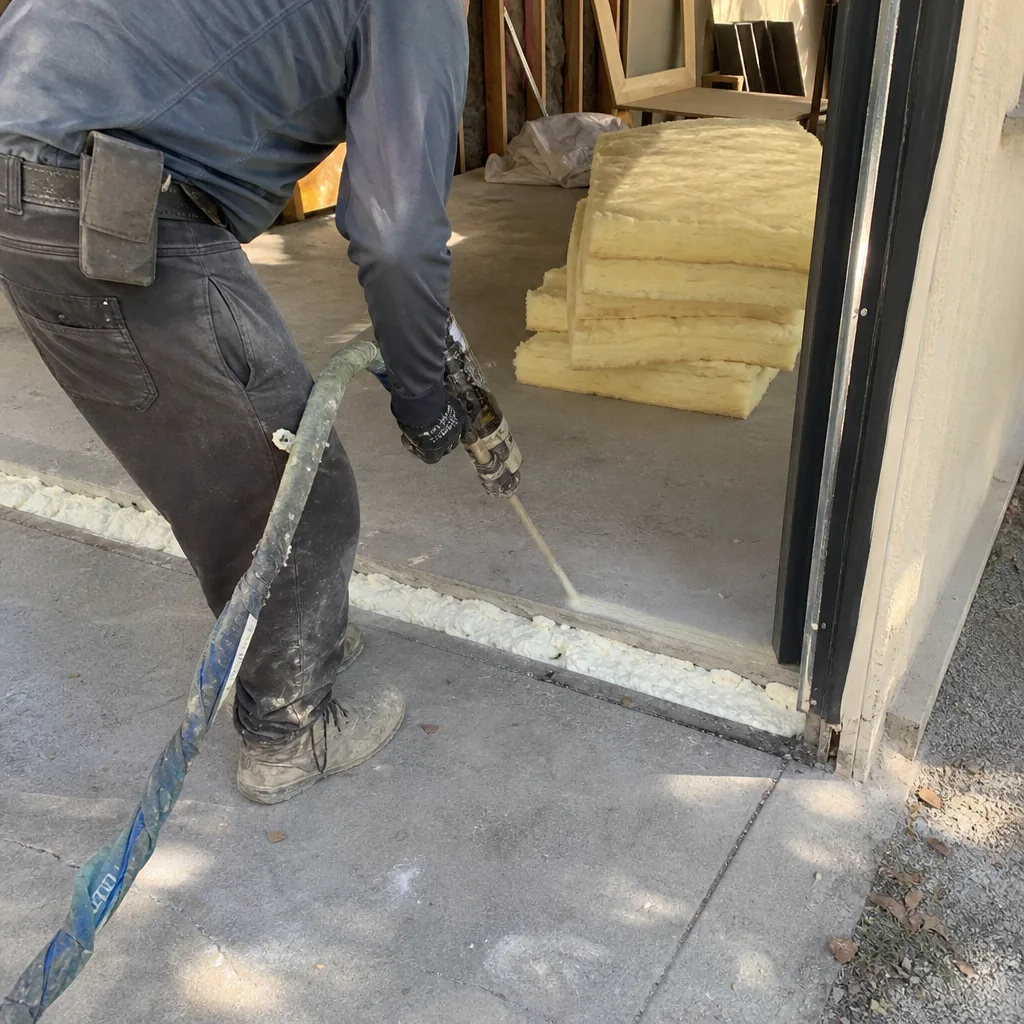
- Uneven panel gaps or visible sag at corners. The adjustable leveling feet, rated for 2,000 pounds each, corrode in the alkaline soil common to West Hollywood’s fill-heavy lots. Once thread engagement drops below 60 percent, the chassis settles differentially and the panel joints open. We measure corner-to-corner diagonal before touching anything; if the spread exceeds 3/8 inch, the feet are done.
- Air whistling at baseboard level during Santa Ana events. The perimeter gasket, a closed-cell EPDM profile, compresses permanently after roughly 18-24 months of thermal cycling in direct sun. West Hollywood’s inland heat exposure accelerates this; units on south-facing slabs in the Norma Triangle or Spaulding Square see it first. Replacement requires full panel lift-off, which is where DIY attempts typically damage the gasket channel.
- Moisture staining at interior corners, especially after January storms. The gasket failure above allows capillary wicking at the slab edge. On hillside-adjacent parcels near Laurel Canyon, we also see this where site drainage was never properly addressed during original install. The stain is the symptom; the cause is always a breach in the primary weather seal.
- Door latch misalignment or binding. Chassis settlement throws the door frame out of square. The latch bolt no longer engages the strike cleanly, and forcing it stresses the multipoint hardware. We check plumb with a 4-foot level; anything over 1/8 inch in 48 inches means the feet need adjustment or replacement before the door hardware is touched.
- HVAC short-cycling or poor temperature hold. On converted junior ADUs with relocated mini-split heads, the line-set penetration seal degrades with the gasket. Unconditioned attic air infiltrates the chase, the thermostat sees false readings, and the compressor never reaches steady state. We verify with a smoke pencil at the penetration; visible draw confirms seal failure.
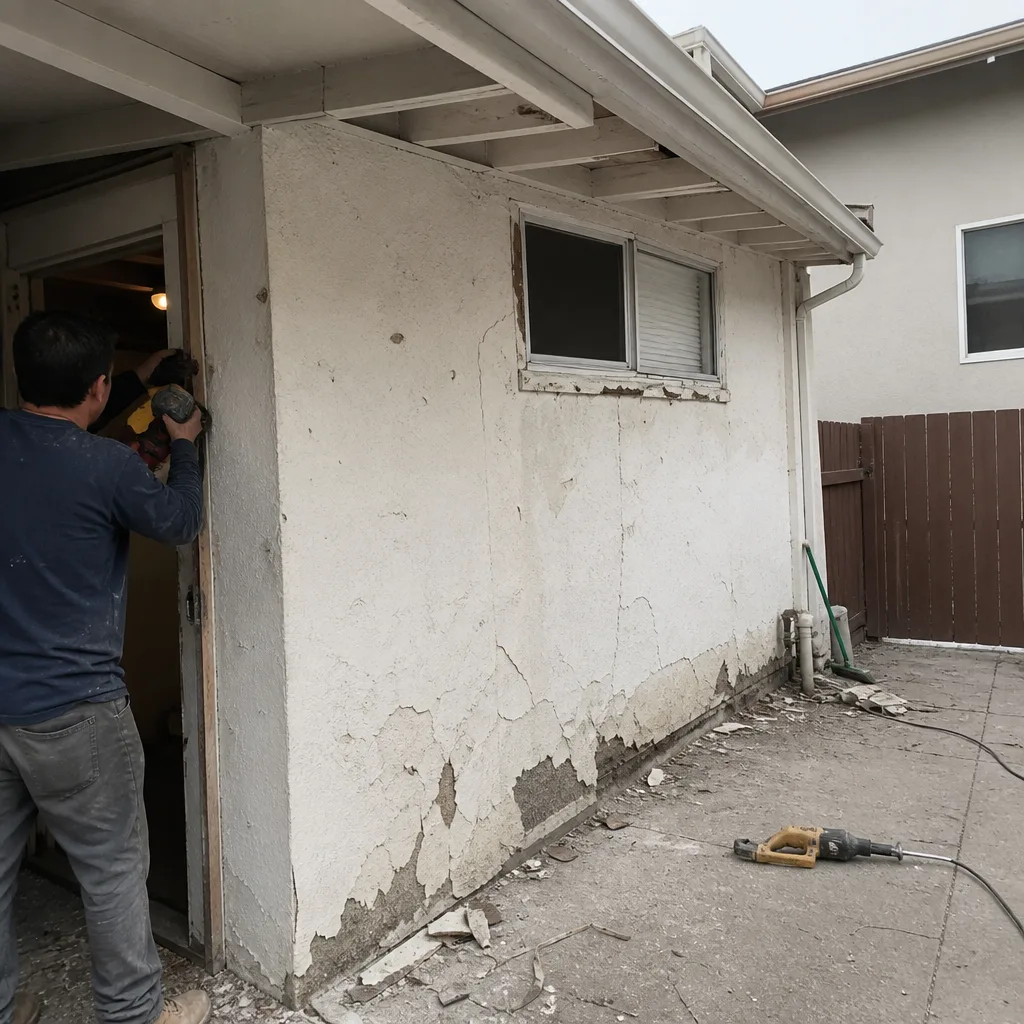 Before
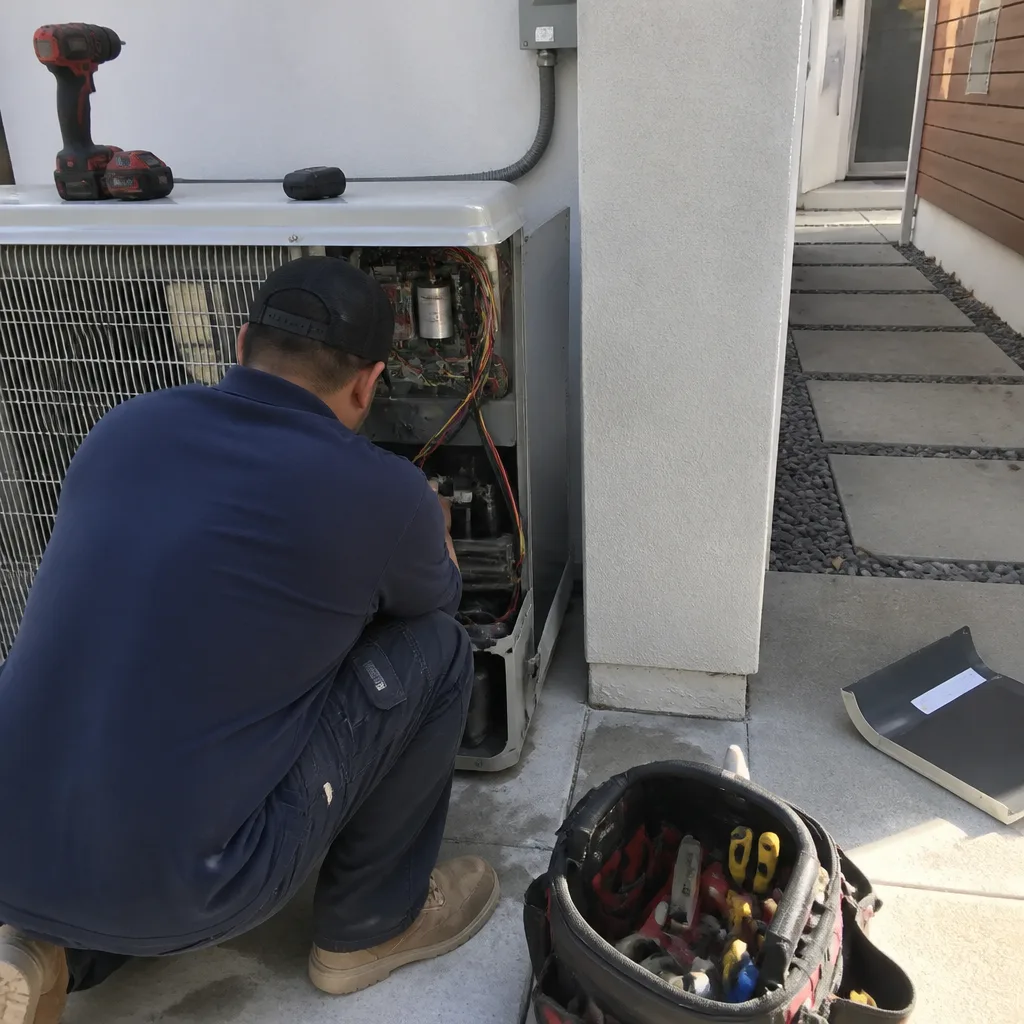 After
AfterReplacement Cost & What’s Included
For West Hollywood properties, Cover junior ADU conversion component replacement breaks down as follows:
| Component Set | Typical Range | What’s Included |
|---|---|---|
| Leveling feet (full set of 8) | $1,800-$2,400 | OEM feet, corrosion-inhibitor paste, laser leveling, permit revision if required |
| Perimeter gasket replacement | $2,200-$3,600 | EPDM gasket, panel lift and reseat, sealant backer rod, thermal imaging verification |
| Partition track conversion kit | $3,400-$5,200 | Track, shims, finish hardware, door prep, permit revision for layout change |
| Full envelope refresh (feet + gasket + seals) | $5,600-$8,400 | All above, plus line-set penetration reseal, documented photo record, 365-Day Done Right Promise |
The spread reflects slab condition, access constraints, and whether the original install documentation is available. Under Haven Standard Clause 1, the written price you receive before work starts is the price you pay; no change orders for conditions visible at inspection. Every replacement includes our documented photo record and is backed by the 365-Day Done Right Promise in writing. We do not quote over the phone for this work; the chassis must be measured level and the gasket channel inspected for deformation before we commit to a number.
DIY or Call Us?
An owner can safely verify the model prefix and photograph the data plate. You can also check for obvious debris in the weep channels at the slab edge and confirm that downspouts or irrigation are not directing water toward the chassis corners. What you should not attempt: lifting a Cover panel to replace a gasket. The panels weigh 340-580 pounds depending on size and finish; the lift requires a suction-cup rig and at least two technicians with fall protection if the unit is on a raised foundation. The gasket channel is aluminum extrusion that kinks if the panel is dragged rather than lifted vertically. We have replaced three channels this year alone after DIY attempts in the Melrose District and West Hollywood Heights.
Similarly, the leveling feet require simultaneous jacking at diagonal corners to avoid racking the frame. The torque spec is 85 foot-pounds, but the real skill is reading the laser level while adjusting, in sequence, without over-correcting. If your unit is still under Cover’s original warranty, DIY work on the chassis voids it. We coordinate warranty status verification as part of our intake. Call (213) 329-7167 to schedule inspection and written estimate.
FAQs
Properly installed OEM gaskets last 8-12 years in West Hollywood’s climate, though south-facing slabs with direct afternoon sun may see 6-8 years. The leveling feet, once replaced with corrosion-inhibitor paste and proper drainage detail, typically outlast the gasket cycle. We document expected lifespan in your project file and schedule a courtesy inspection at year five. Call (213) 329-7167 to book the initial replacement and set the follow-up.
No. EPDM compression set is irreversible; once the material has taken a permanent deflection, caulk or tape is a temporary patch that traps moisture and accelerates corrosion at the slab edge. We have removed enough failed tape jobs to know that the “repair” always costs more than doing the gasket properly the first time. The documented photo record we provide shows the old gasket cross-section so you can see the compression set yourself. Call (213) 329-7167 for replacement pricing.
A leveling foot replacement requires one day; a full envelope refresh with gasket, feet, and line-set seals takes two to three days, depending on panel count and whether permit revision is required for the junior ADU layout change. We do not rush the thermal imaging verification; the unit must run through a full diurnal cycle before we sign off. Your written schedule, provided at contract signing under Haven Standard Clause 3, lists each milestone with a completion window, not a single date. Call (213) 329-7167 for a timeline specific to your model and site.
We stock the CV2 and CV3 leveling feet, gasket profiles, and line-set penetration seals in our West Hollywood warehouse. CV1 components, including the discontinued partition track, are machined to order with a 5-7 day lead time. We also stock compatible finish hardware from McKinney and Hafele for projects where Cover’s lead times would push the schedule. Every part is verified against your data plate before it leaves our facility. Call (213) 329-7167 with your model prefix for same-day availability confirmation.
Ellery ADU Studio West Hollywood is an independent design-build studio; we are not affiliated with Cover. We specify and coordinate Cover, Abodu, Dvele, and other prefab systems under our single-contract model. The document is the promise. Everything else is a conversation.
Ready to fix what’s failing? Call (213) 329-7167 to schedule your free estimate. Nadia Ellery or a member of our team will inspect the unit, verify model compatibility, and provide a written price before any work begins, per Haven Standard Clause 1.
Written by Nadia Ellery, Owner, Ellery ADU Studio West Hollywood at Ellery ADU Studio West Hollywood, serving West Hollywood and nearby areas.